
Meet Dr. Blondelle Melina Atsafack, ACEIoT graduate from Cameroon as she shares her PhD journey at UR’s ACEIoT
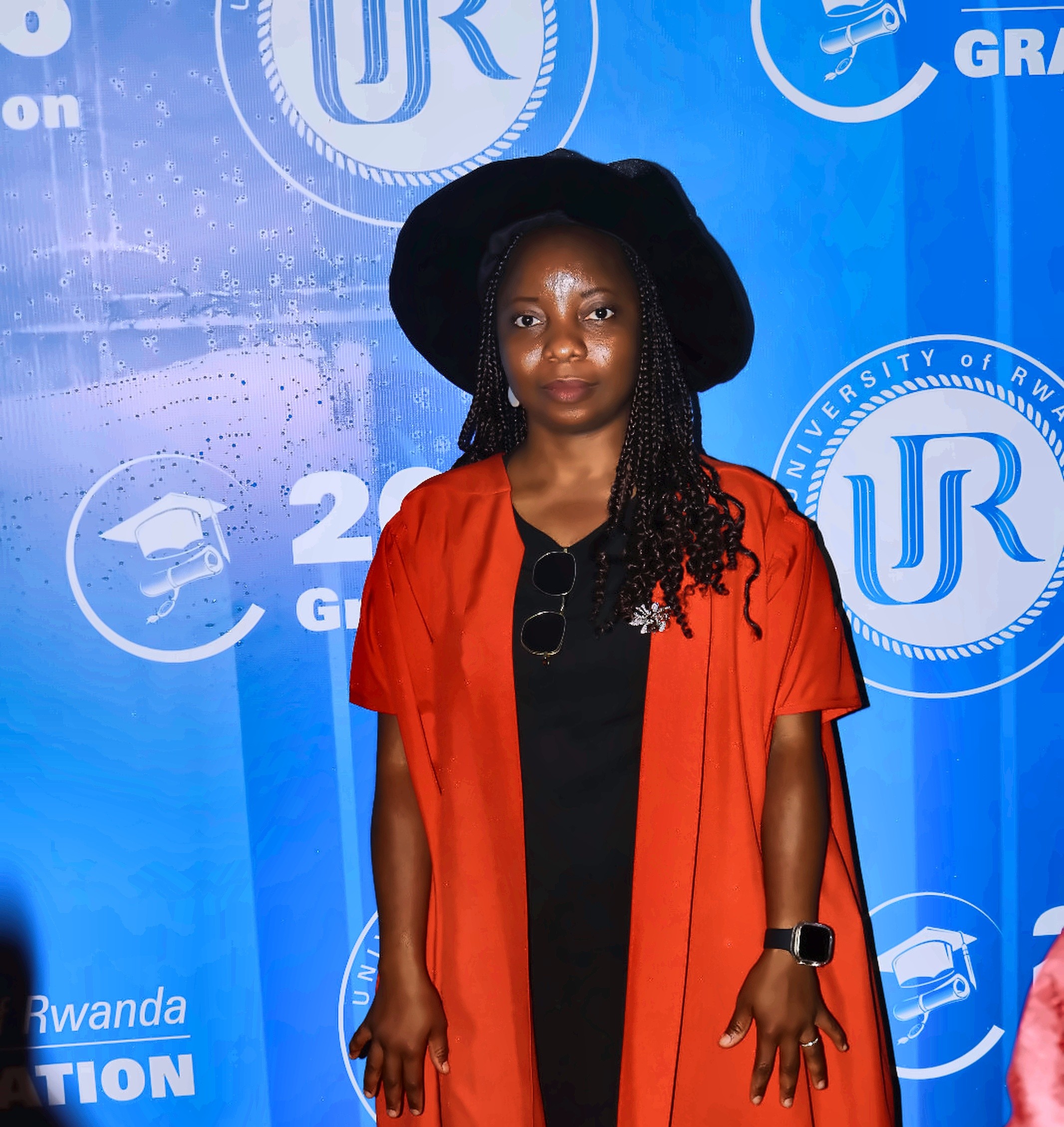
Dr. Blondelle Melina Atsafack, Cameroonian, is one of the 49 PhD graduates who were awarded their degrees at the most recent University of Rwanda (UR) graduation ceremony, which saw a total of 4,953 students graduate. She is one of the Regional Scholarship and Innovation Fund (RSIF) sponsored students. She specialized in Embedded Computing Systems and is one of six PhD graduates from the African Centre of Excellence in Internet of Things (ACEIoT). We spoke with her to learn more about her academic journey, her experience at the University of Rwanda, and her perspectives on Rwanda in general. Here are excerpts:
Could you kindly introduce yourself and tell us how you learnt about the PhD opportunity at the University of Rwanda, particularly while living outside Rwanda?
My name is Dr. Blondelle Melina Atsafack, and I come from Cameroon. I recently completed my PhD in Internet of Things, with a specialization in Embedded Computing Systems, at the African Centre of Excellence in Internet of Things (ACEIoT). I was actively looking for PhD scholarship opportunities in my area of expertise when a friend of mine shared with me the call for scholarships application from Regional Scholarship Innovation Funds(RSIF). I was very interested in it, so I decided to apply and selected UR-ACEIoT as a host institution, even though I was living outside Rwanda at the time.
Could you briefly share your experience as a PhD student at the African Centre of Excellence in Internet of Things (ACEIoT)?.
My journey at ACEIoT was filled with opportunities, challenges, learning, personal growth, and discovery. Overall, the experience helped me become a better version of myself, both personally and professionally.
For example, when I first joined the research laboratory, I could barely express a complete sentence in English. Today, I can communicate confidently in the language. This is one of the many ways my experience at ACEIoT contributed to my personal development.
Academically, through the centre’s leadership and the various lectures, workshops, and weekly research seminars, I gradually developed a deeper understanding of my research topic and gained the knowledge and skills needed to address challenges that initially seemed impossible.
I was also fortunate to have an excellent supervisory team, dedicated staff at the centre, and supportive colleagues in the laboratory who guided and encouraged me throughout my PhD journey. Their collective support played a significant role in helping me reach this milestone. Honestly, I could not have made it without them.
What were the main challenges you faced during your PhD journey, and how did you overcome them to successfully complete your studies?
I must say that Rwanda is a very beautiful and welcoming country, and I had a very positive experience living and studying there. Therefore, I encountered relatively few challenges outside my academic journey.
One of the main challenges I faced was understanding and gaining a clear direction on my research topic, particularly at the beginning of my PhD. However, with the support of my lecturers, supervisory team, colleagues, and the dedicated staff at ACEIoT, I gradually overcame these difficulties and developed the confidence and knowledge needed to carry out my research.
Of course, completing a PhD also requires a great deal of commitment, discipline, and sacrifice. There were times when I had to work late into the night and sometimes spend sleepless nights to meet deadlines and fulfil the University of Rwanda’s academic requirements.
Looking back, these challenges taught me the importance of perseverance, patience, and teamwork. They also made my achievement even more meaningful.
What did you enjoy most about your PhD journey at ACEIoT?
What I enjoyed most about my PhD journey at ACEIoT was experiencing a different approach to leadership.
During my time at the Centre, I realized that effective leadership does not require arrogance or distance from the people you lead. On the contrary, a leader can be humble, approachable, supportive, and still achieve excellent results.
The leadership at ACEIoT demonstrated these qualities. They were always accessible, understanding, and willing to support students, especially whenever we faced academic or administrative challenges. Knowing that we could count on their guidance and support significantly reduced the stress that often comes with pursuing a PhD.
For me, this was one of the most valuable aspects of my experience at ACEIoT. It also taught me an important lesson about leadership: you can lead people effectively while remaining humble, respectful, and genuinely concerned about their well-being.
In your opinion, what improvements could be made to enhance the delivery and management of PhD programmes at the UR’s ACEIoT?
Honestly, based on my personal experience, I do not have any major concerns to raise. The University of Rwanda already makes considerable efforts to provide students with a good academic and research environment.
Throughout my PhD journey, I experienced the commitment of supervisors who were always willing to guide, support, and contribute to their students’ academic and professional development.
Another important strength of the University is its international outlook. Through its numerous partnerships and collaborations with universities and institutions across Africa, Europe, America, and Asia, it provides students with valuable opportunities for international exposure, research collaboration, and academic exchange.
I strongly believe that these partnerships add value to the PhD programmes and enhance the international recognition of degrees awarded by the University of Rwanda.
Rather than identifying major shortcomings, I would encourage the University to continue strengthening these existing initiatives, particularly international research collaborations, academic exchanges, and student support systems.
What did you appreciate most about studying at the University of Rwanda and living in Rwanda in general?
What I appreciated most about studying at the University of Rwanda and living in Rwanda was the people and the overall environment.
In general, Rwandans, and particularly the staff at the University of Rwanda, are very humble, kind, respectful, and supportive. They make life easier, especially for international students who have travelled far from their home countries and families to pursue their studies. Their kindness and welcoming attitude helped me feel comfortable and at home.
Furthermore, as someone who values cleanliness, safety, and well-organized institutions, I found Rwanda to be an excellent place to live and pursue my PhD. The country’s peaceful atmosphere, organization, and welcoming culture made my academic journey even more enjoyable.
Overall, Rwanda gave me not only an opportunity to achieve my academic goals but also a wonderful life experience that I will always cherish.
What advice would you give to prospective international students considering pursuing their PhD studies at the University of Rwanda?
My advice to prospective international students is simple: stay focused on your goals and make the most of the opportunity you have been given.
Studying abroad is a great opportunity, but it also comes with responsibilities and sacrifices. When you leave your home country and family to pursue a PhD, you must remain committed to the purpose that brought you there. Avoid unnecessary distractions, manage your time wisely, and stay dedicated to your research.
Of course, there will be challenges along the way, but do not allow them to discourage you. Make use of the opportunities, resources, guidance, and support provided by the University of Rwanda’s ACEIoT.
Most importantly, remember that the University can provide you with the right environment and support, but your success will ultimately depend on your determination, discipline, and hard work.