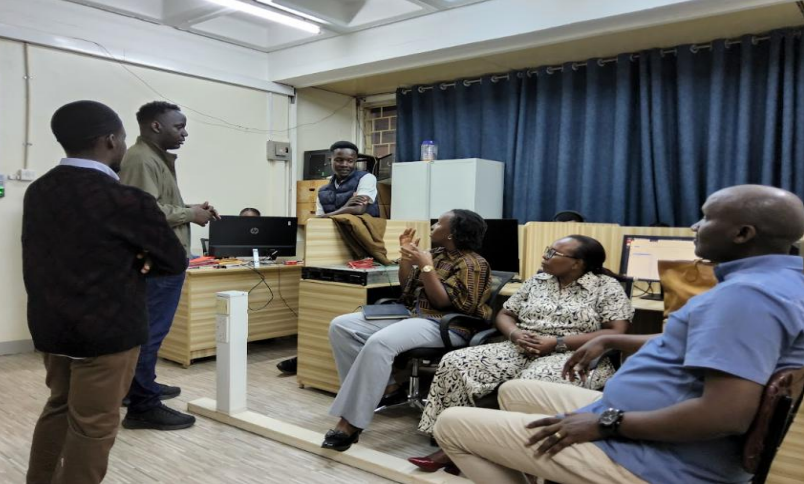
On 24th to 28th March 2026, three researchers from Rwanda packed their bags for Kampala with a week visit, simple but powerful mission: to learn, share, and build something bigger together.
Prof. Nadine Rujeni, Dr. Noella Josiane Umuhoza Karemera, and Mr. Ngabo Desire represented TAIRI Lab from the University of Rwanda and embarked on a visit to Makerere University, one of Africa's oldest and most respected institutions, and home to a constellation of AI labs quietly reshaping what technology can do for the continent.
The week was a major success.
The week began on a focused and inspiring note at Makerere University, where TAIRI project members gathered for a kick-off meeting with Dr Joyce Nabende, Principal Investigator of the AI Lab. What started as a planning session aligning priorities and mapping activities for the week quickly evolved into something far more impactful; a shared commitment to using AI to tackle pressing health challenges across the region.
At the Makerere AI Lab, conversations flowed naturally both teams were working on strikingly similar problems: using artificial intelligence to improve healthcare and support farmers. What could have been competition became an immediate sense of kinship
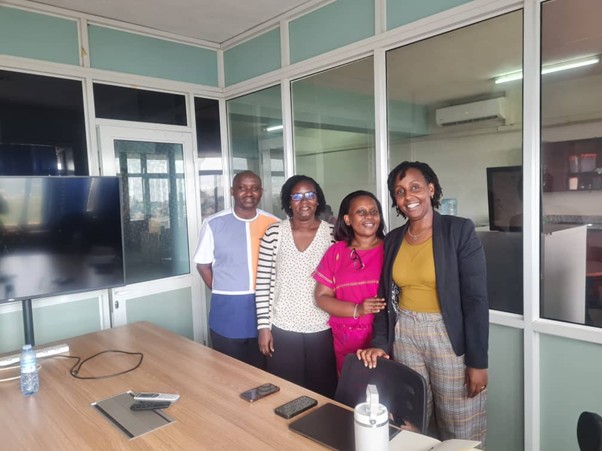
The team visited the AI Quality Lab (AIRQO), AI lab specialized in developing AI devices and nodes deployed in different areas of Kampala city for air quality and environmental monitoring and interacted with researchers at this Lab
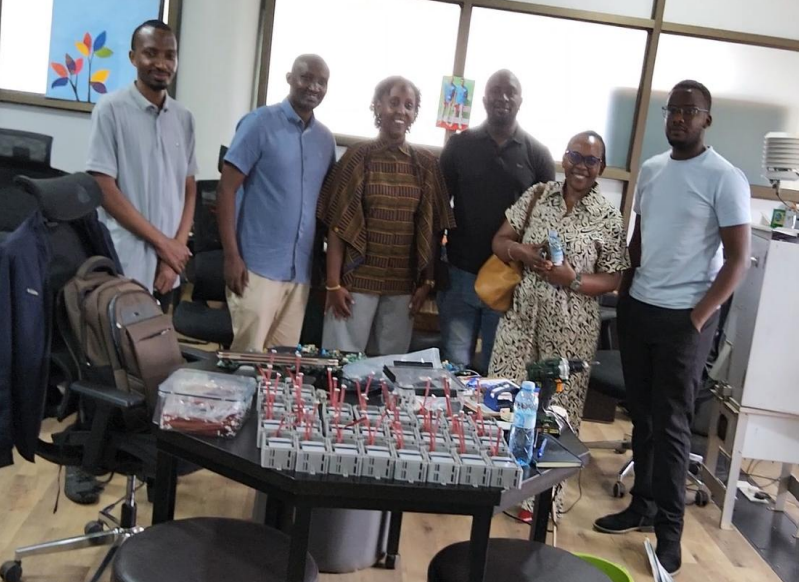
At the Marconi Lab, an AI applied to Health care and Agriculture, brought another dimension: researchers were teaching machines to understand local African languages, turning AI into a tool that speaks to communities in their own voice, and assisting clinicians with decision-making grounded in the languages their patients use.
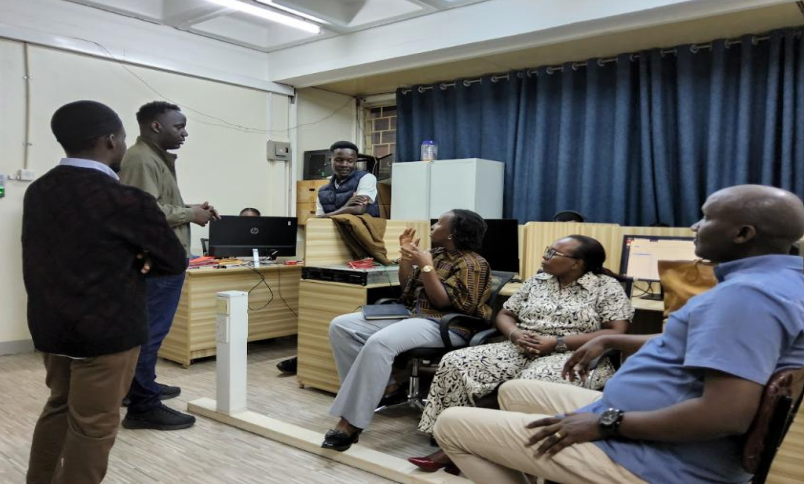
TAIRI project members stepped into the Healthcare Lab at Makerere University, where innovation meets urgent public health needs. There, they explored an AI-powered malaria diagnosis lab focused on reducing turnaround time and expanding testing capacity in underserved, high-endemic regions of Uganda.
At the Healthcare Lab, the stakes felt visceral: AI systems being trained to diagnose malaria faster, in areas where every hour matters. Rwanda knows this challenge intimately. What made this visit particularly encouraging was the discovery that collaboration had already quietly begun , a Masters student from the African Centre of Excellence in the Internet of Things (ACEIoT) was already working within this space. The conversation quickly turned to how that existing thread could be woven into something broader.
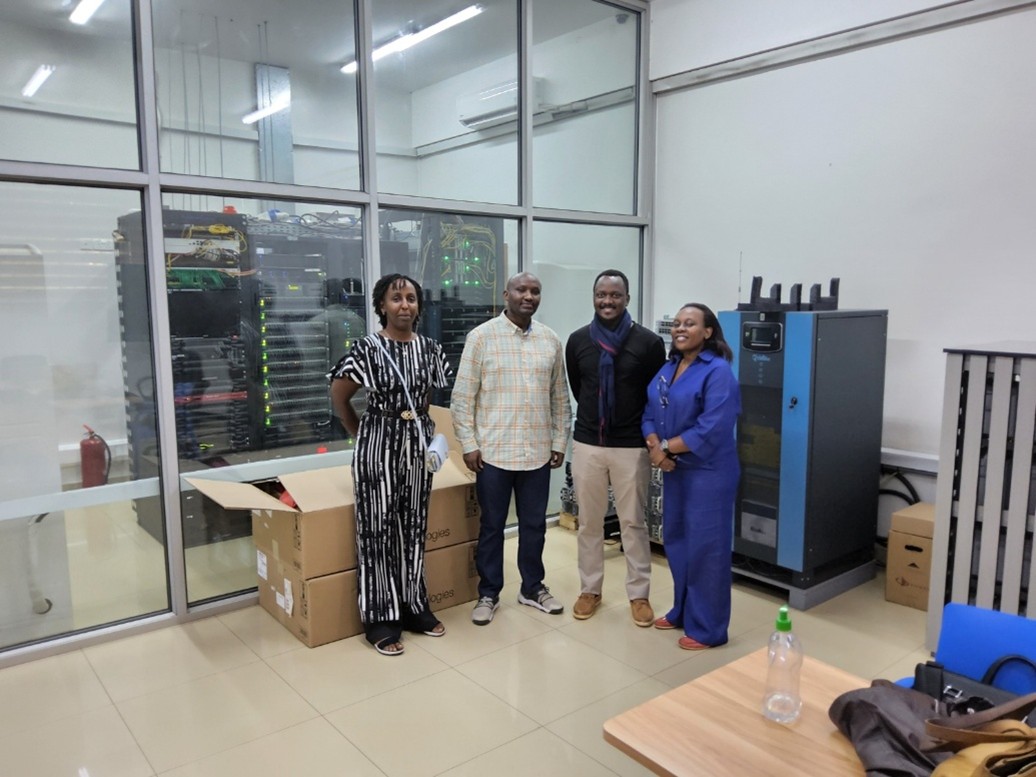
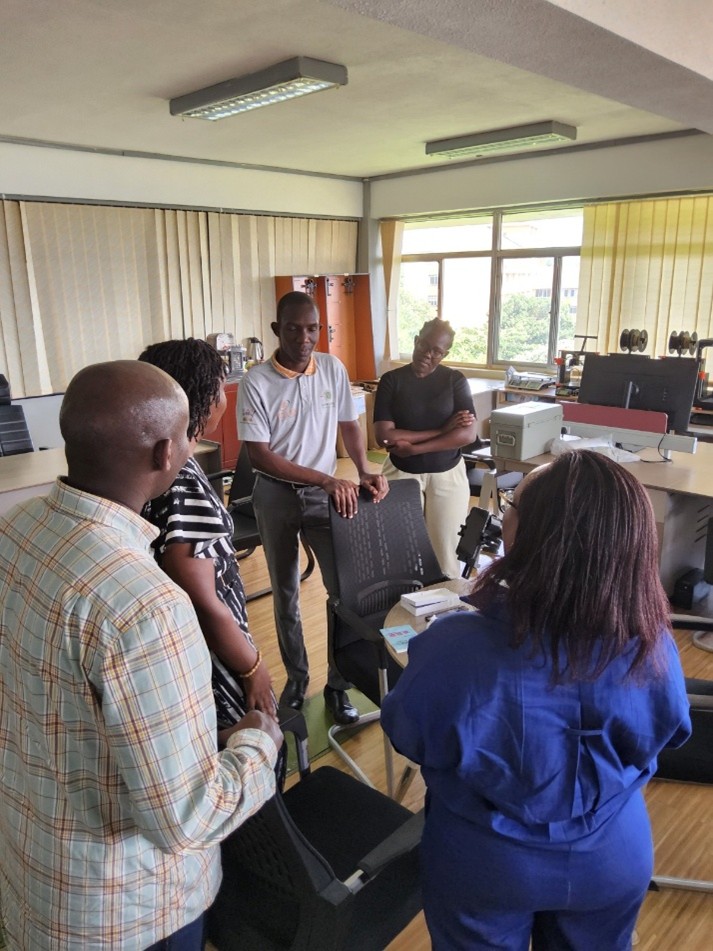
Perhaps the most charged moment came at the Infectious Diseases Institute(IDI), independent institute that focuses on infectious disease research, where scientists are using high-performance computing to fight antimicrobial resistance, one of the world’s quietest but deadliest crises. On one side of the institute’s work sits AI and bioinformatics — tackling pathogen genomics with tools that most African institutions have never had access to. On the other, clinical research on HIV, neglected tropical diseases, and their associated comorbidities. The TAIRI team saw not just an institution but a potential partner for joint grants, student exchanges, and shared expertise. Contacts were exchanged with a view to formalising a student exchange programme in AI and bioinformatics — a process that will require a formal institutional agreement once funding is secured. A joint grant application is also being explored to build on the shared interest in infectious disease research.
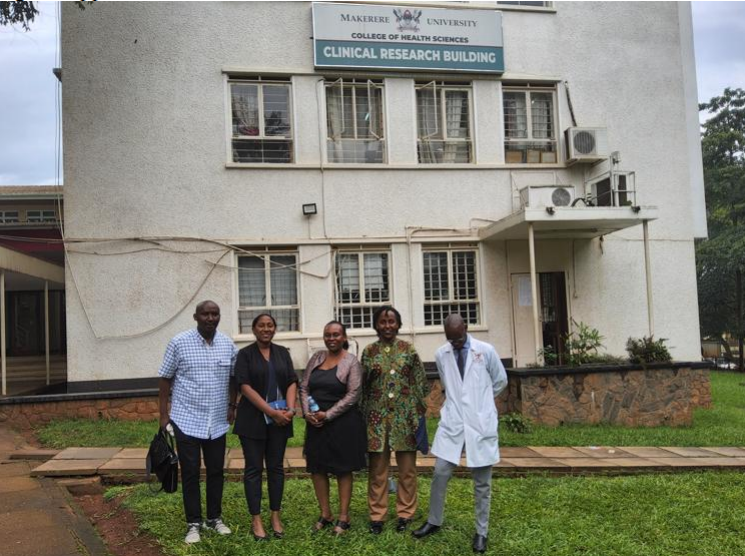
The week closed at IndabaX Uganda 2026 conference, a gathering of Africa's brightest AI minds. The message echoing through the room was clear: Africa doesn't just want a seat at the global AI table , it wants to help build the table itself.
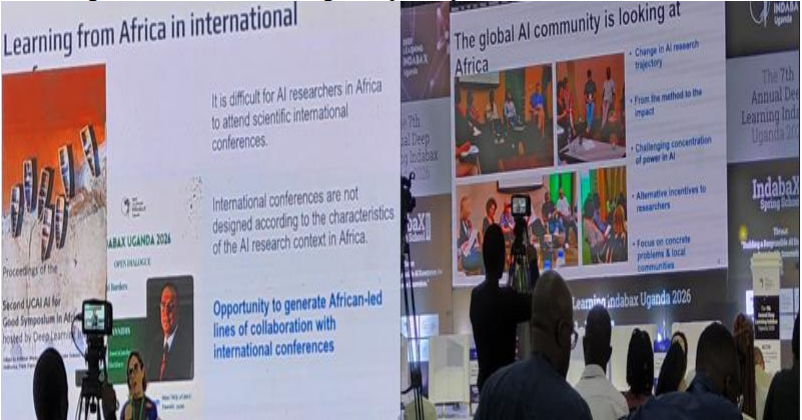
The Rwanda delegation flew home with notebooks full of ideas and, more importantly, relationships. The visit produced tangible outcomes: a concept note on AI-powered environmental disease monitoring co-developed with AIRQO, an agreement for Makerere AI Lab researchers to contribute to TAIRI’s ongoing seminar and webinar series, contacts established for a student exchange programme with the IDI bioinformatics team, and a shared interest in pursuing joint grant applications. Underpinning all of it is a recognition that technology transfer , deploying sensor nodes already developed at Makerere in Rwanda rather than starting from scratch, for instance could save both institutions time and resources. In a recent monthly TAIRI Lab meeting, these outcomes were shared with the rest of the project team, with concrete next steps already being mapped for shared seminars, student exchanges, and joint research proposals.
What Came Out of It
By the end of the visit, the conversations had translated into real, actionable outcomes.
A concept note on environmental disease monitoring was co-developed with the AIRQO Lab, proposing the use of AI and environmental DNA (eDNA) to detect and track diseases before outbreaks take hold. Both teams are now actively exploring funding opportunities to bring this idea to life.
New pathways were also opened through the Infectious Diseases Institute, where contacts were established for a student exchange in AI and bioinformatics. This creates an opportunity for students from the University of Rwanda to gain hands-on experience, with a formal agreement to follow once funding is secured.
At the same time, an ongoing scientific exchange was proposed with the Makerere AI Lab, where researchers will participate in TAIRI’s regular seminars and webinars ensuring continuous collaboration and knowledge-sharing beyond this single visit.
Africa is solving Africa's problems. And it's doing it together.