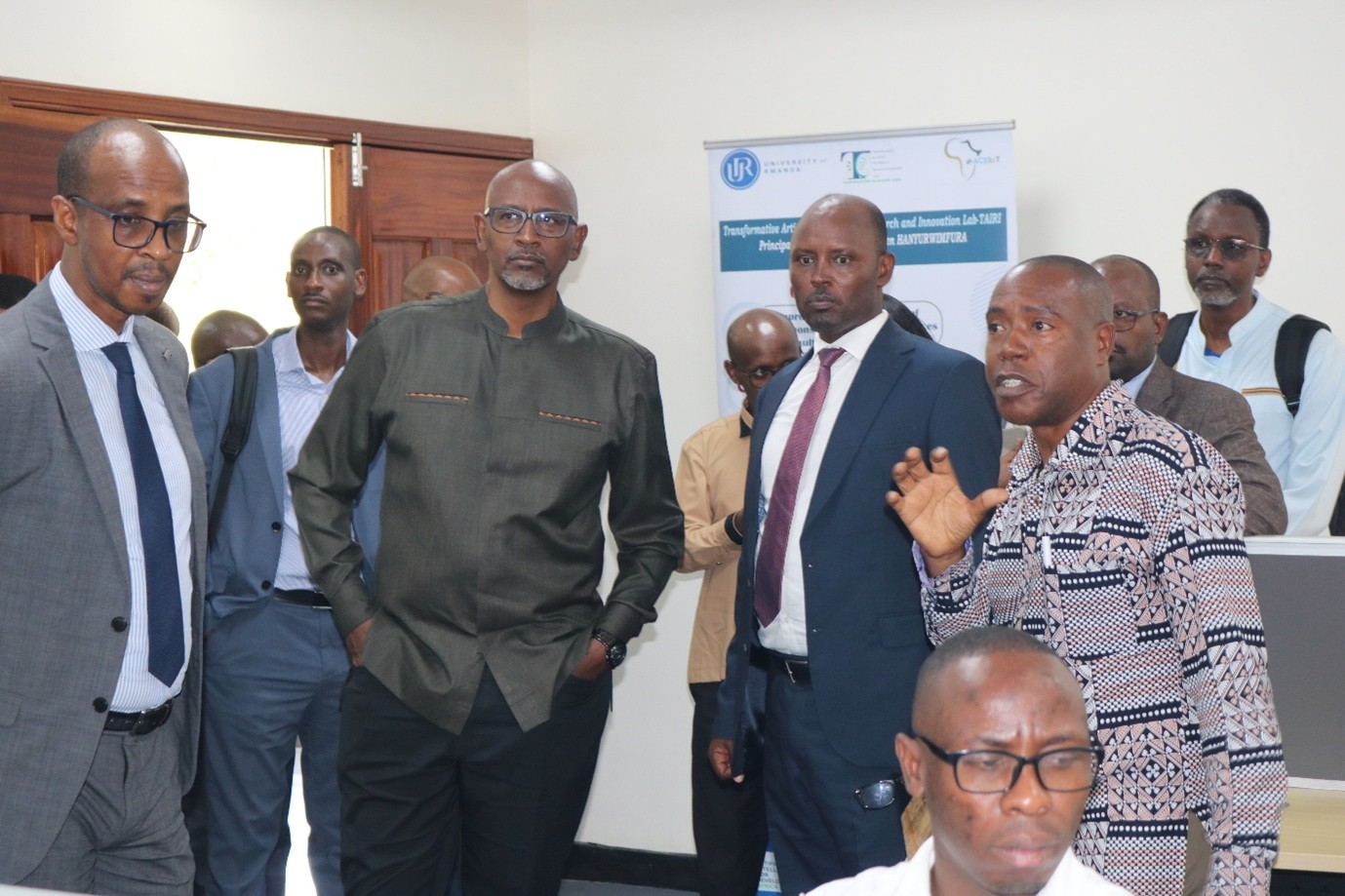
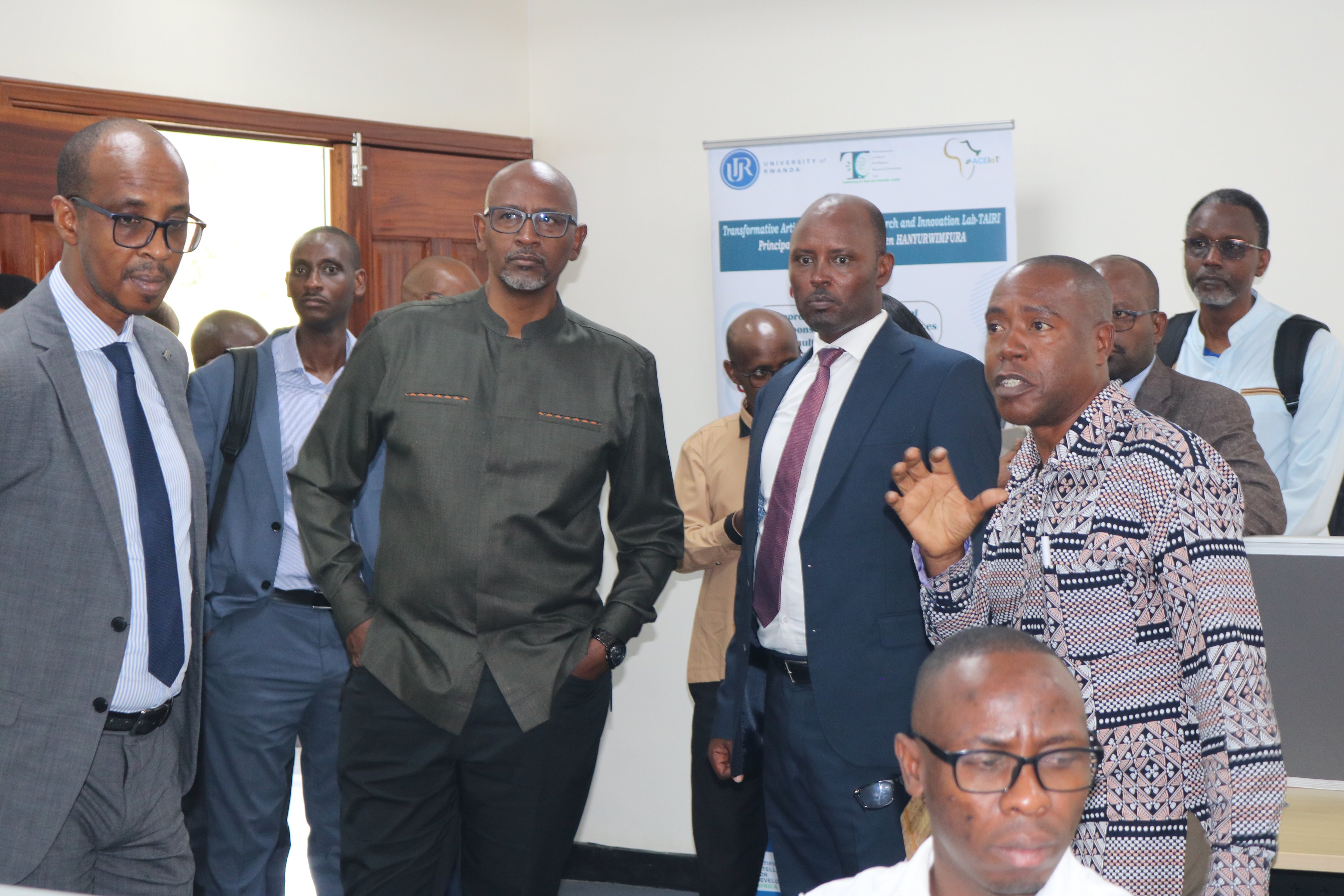
The Minister of Education, Hon. Joseph Nsengimana, and the Director General of the Higher Education Council, Dr. Edward Kadozi, visited the University of Rwanda this week as part of part of the nationwide outreach to Higher Learning Institutions by HEC and MINEDUC. The Minister visited ongoing research at the Transformative Artificial Intelligence Research and Innovation Lab (TAIRI) and the African Centre of Excellence in Internet of Things (ACEIoT). The Vice Chancellor and UR Senior Management hosted the delegation, with researchers from both centres on hand to walk the visitors through current projects and field results.
TAIRI runs PhD and Masters research on applied AI across three areas: agriculture, health, and the environment. The lab's model is to keep researchers close to the problems they study, with project pipelines that move from prototype through field testing to deployment with users in Rwanda. Supervisors from across UR's College of Science and Technology co-advise students alongside external partners, which means most projects sit at the boundary between an academic question and a working system. Two researchers presented their work in detail to the Minister and the DG.
Umutoni Marie Ritha showed her research on early detection of reproductive health disorders and women's hormonal fluctuations. The work targets a real gap: infertility affects roughly 1 in 6 people globally, with conditions like PCOS (8–13% of reproductive-aged women), endometriosis (10–15%), uterine fibroids (up to 80% of women by age 50), and thyroid disorders driving much of the burden. Current care tends to be fragmented, reactive, and poorly personalised. Ritha's system pulls together three data sources survey data on demographics and lifestyle, hospital records covering hormone levels and lab tests, and IoT wearables tracking body temperature, heart rate, activity, and volatile organic compounds.
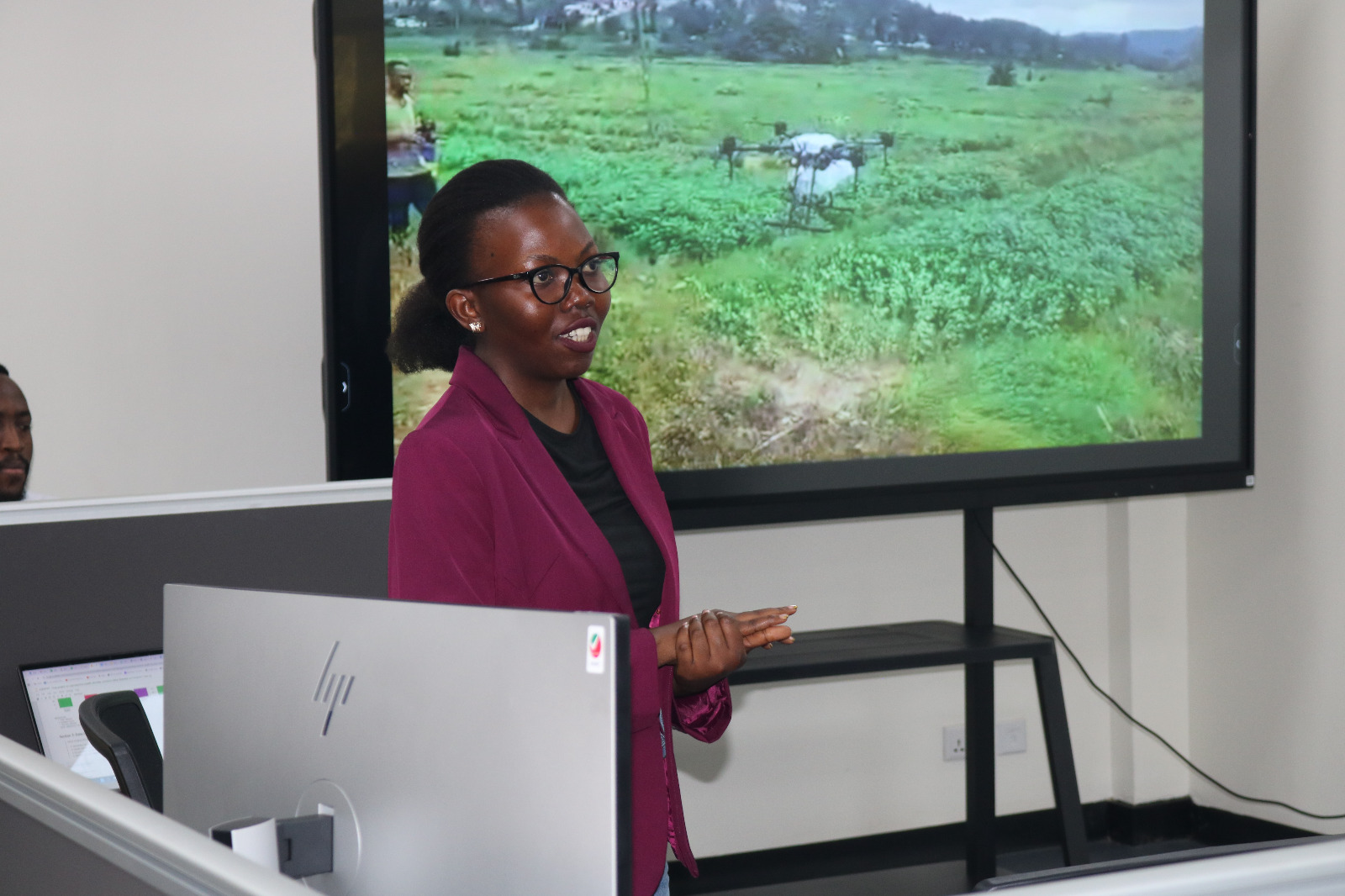
A multimodal AI architecture combines XGBoost and deep neural networks for tabular features, CNN/LSTM/GRU models for time-series sensor patterns, and ResNet/VGG-based CNNs for medical imaging, with an attention-based fusion layer producing an infertility risk classification. The methodology runs in three phases: retrospective analysis of records from CHUK and Muhima for women aged 18–45, a wearable prototype targeting 385 participants over three months, and the multimodal AI development itself.
Happy Axel Muyombano presented Ampere Vision Rwanda, an AI-enabled drone venture grown out of research at the lab. Ampere Vision was recently awarded a 15 million RWF grant from Heifer International Rwanda through the AYuTe Africa Challenge, a continental competition that funds agritech ventures led by young Africans. The drones address three problems for Rwandan farmers: pre-harvest crop losses through real-time monitoring, high pesticide costs through targeted spraying, and chemical residues on produce through precision application rather than blanket coverage.
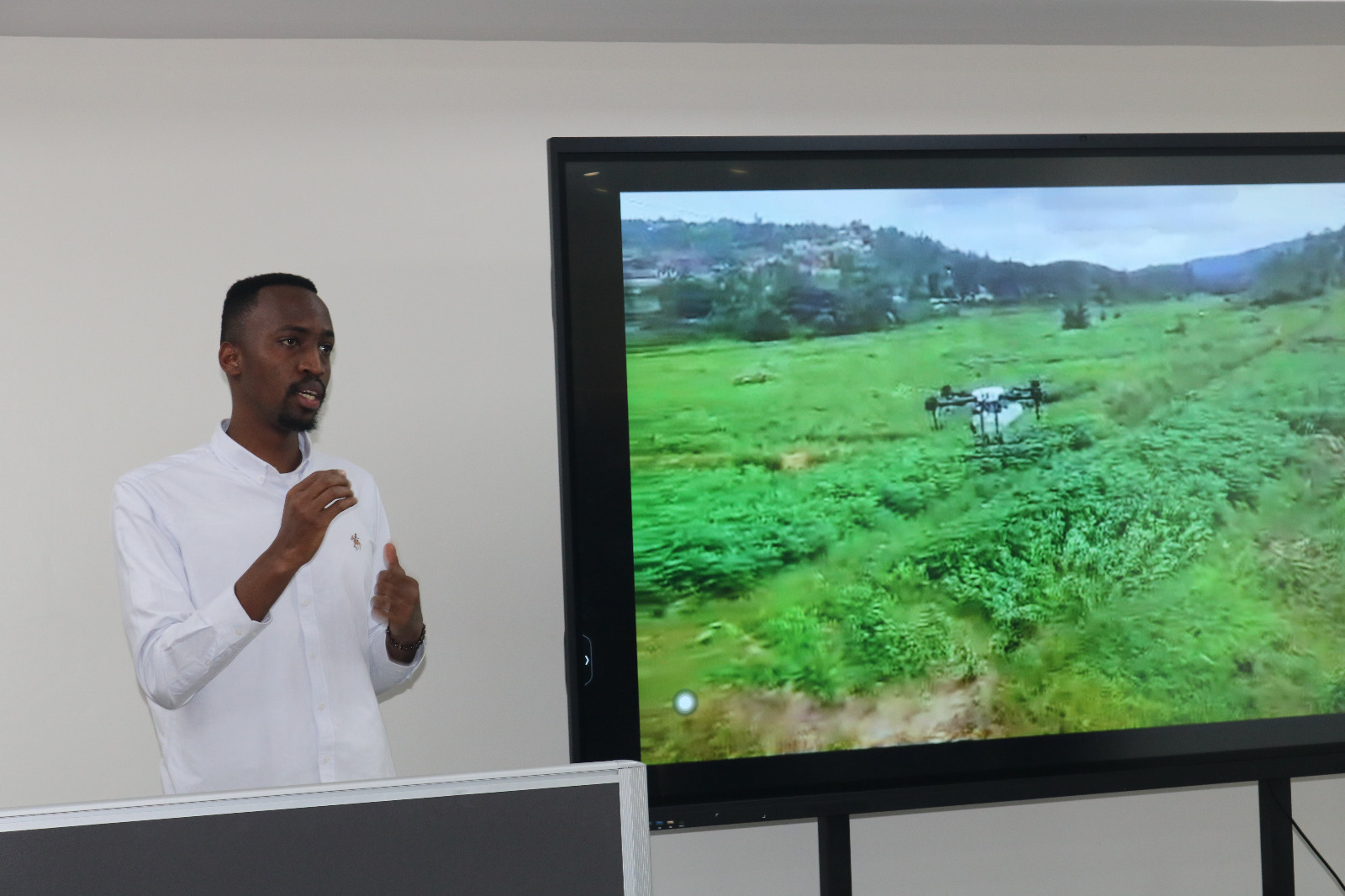
The grant funds the next phase of fleet expansion and field deployment with cooperative farmers in Northern and Eastern Rwanda, alongside continued work on the underlying computer vision models that drive pest detection and spray targeting.
The delegation then moved to ACEIoT, where the Minister visited research groups working on connected sensing, embedded systems, and IoT applications for African contexts.
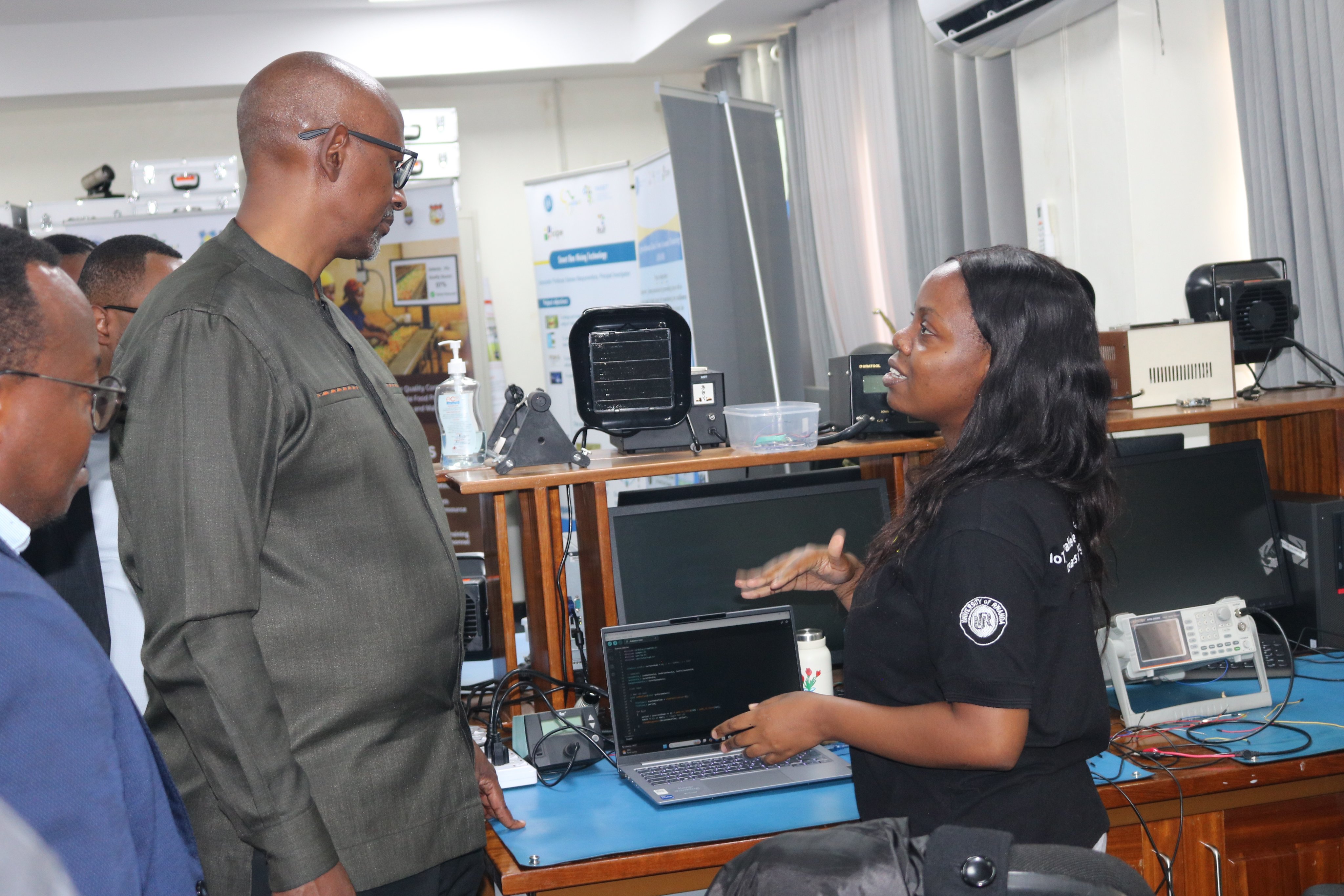
ACEIoT and TAIRI together represent the University's effort to build deep technical capacity in AI and IoT alongside research training, with graduates moving into academia, government, and the local technology sector.
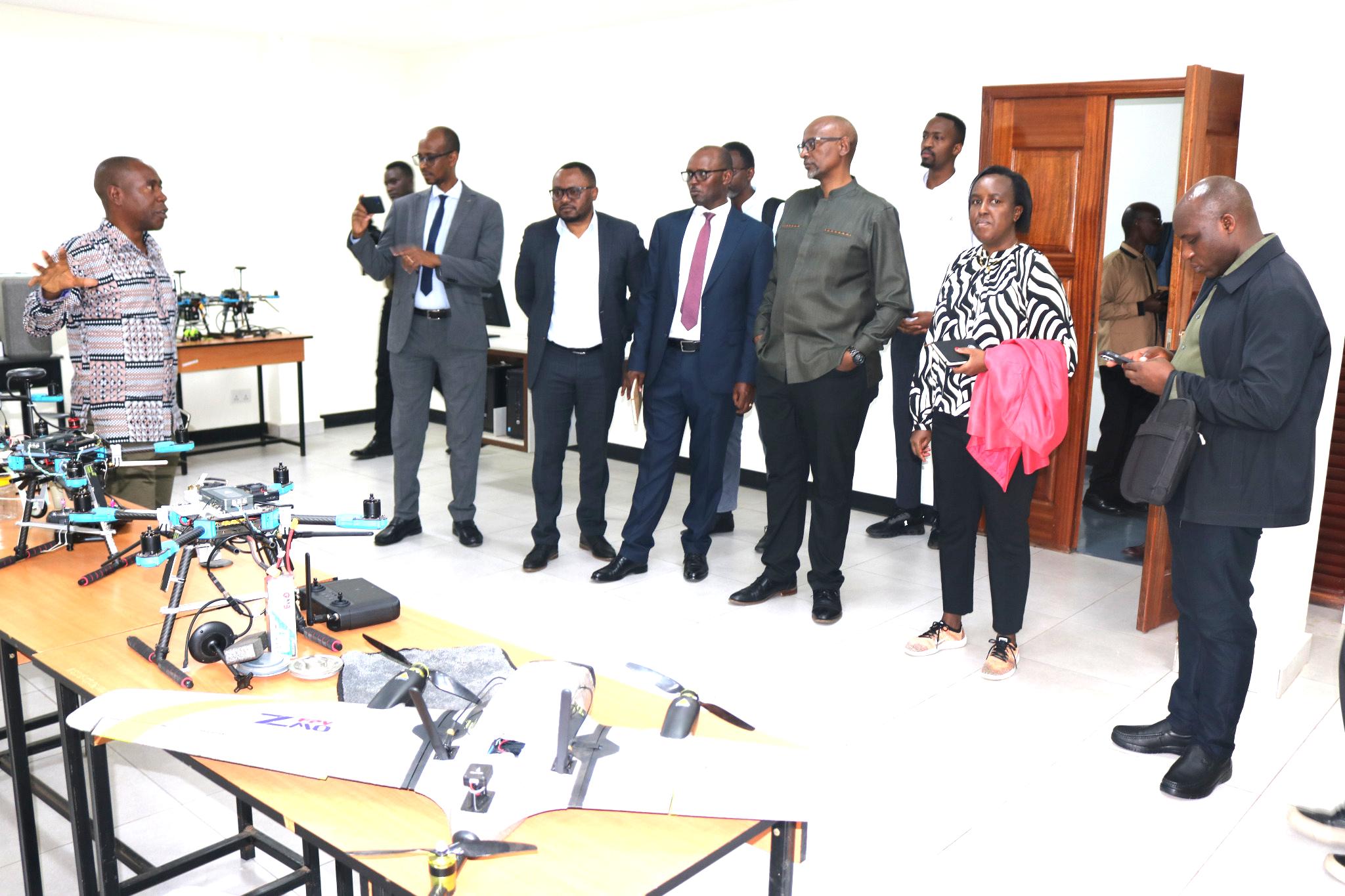
The visit reflects continued engagement from the Ministry of Education and HEC in the research direction of the University of Rwanda's specialised labs, and an interest from leadership in seeing how research investments translate into deployed systems and trained researchers.